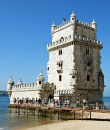
 In
the16. century. Lisbon experienced its blossom and became
one of the most important commercial centres and most magnificent
metropolises in Europe. Under the reign of Manuel I. annually 2000
ships drove up the Tejo delta, loaded with black slaves, jewels,
spices and silk from Africa, India and South America! In
the16. century. Lisbon experienced its blossom and became
one of the most important commercial centres and most magnificent
metropolises in Europe. Under the reign of Manuel I. annually 2000
ships drove up the Tejo delta, loaded with black slaves, jewels,
spices and silk from Africa, India and South America!
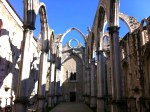 Of all the splendour hardly a stone remained.
On All Saint's Day in 1755 the city was almost completely destroyed
by the heaviest earthquake, which ever shook a big European city.
40,000 humans died! Napoleon's invasions caused further destruction
.... Of all the splendour hardly a stone remained.
On All Saint's Day in 1755 the city was almost completely destroyed
by the heaviest earthquake, which ever shook a big European city.
40,000 humans died! Napoleon's invasions caused further destruction
....
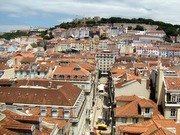
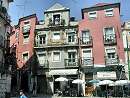 Today Lisbon
is one of the most charming metropolises of Europe
and the hilliest port in the world; a city, which one should explore
best on foot or by means of public transportation. Historic trams
squeaking meandering through the narrow, mountainous streets, cable
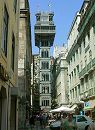
railways and a historical elevator in the midst of the city (Elevator
de Santa Justa) make it easy for you, to explore all parts of the
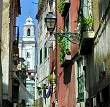
city. The oldest district of Lisbon is the
Alfama. Built on rock, it largely
survived the quake. Here was the centre of the old Moorish city.
Although it must be urgently redeveloped, - like also Venice
- the place between romantic and poverty has its own very special
charm! Today Lisbon
is one of the most charming metropolises of Europe
and the hilliest port in the world; a city, which one should explore
best on foot or by means of public transportation. Historic trams
squeaking meandering through the narrow, mountainous streets, cable
railways and a historical elevator in the midst of the city (Elevator
de Santa Justa) make it easy for you, to explore all parts of the
city. The oldest district of Lisbon is the
Alfama. Built on rock, it largely
survived the quake. Here was the centre of the old Moorish city.
Although it must be urgently redeveloped, - like also Venice
- the place between romantic and poverty has its own very special
charm!
|